This may be one of the craziest endurance-sport stories of the year.Ran 824.8 KM doesn't count. The Biotropika Backyard Ultra Controversy
The Distance Happened. The Record Didn’t.
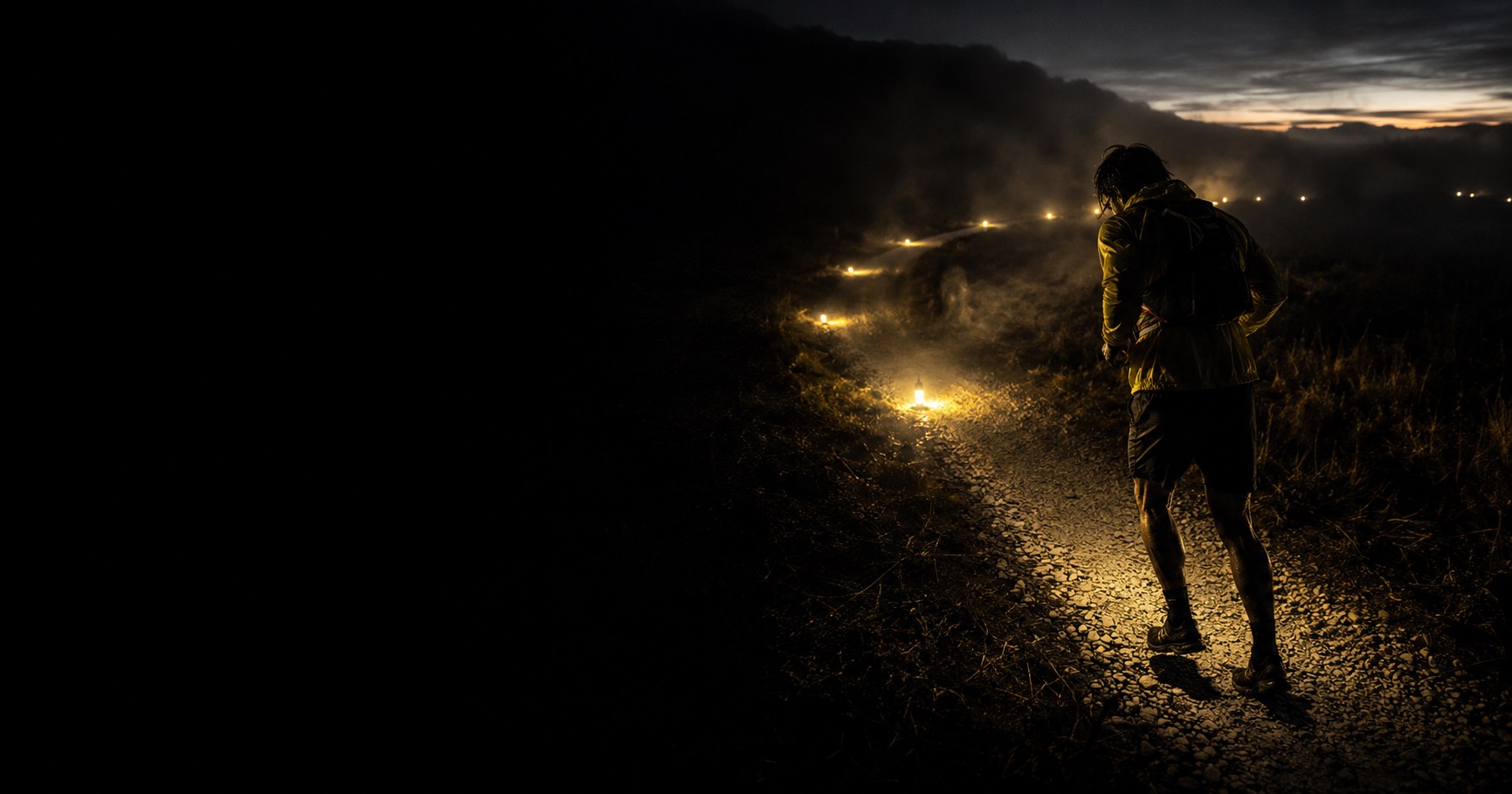
For more than five days, Dmitry Klimov kept answering the bell. Every hour, on the hour, he completed another 6.706-kilometer—or 4.1667-mile—loop at Russia’s 2026 Biotropika Backyard Ultra. When he finally stopped, he had completed 123 “yards,” covering 824.838 kilometers, approximately 512.5 miles.
That is roughly 19.5 marathons and five days plus three hours of consecutive hourly starts. For the first 120 hours, the format produces exactly 100 miles every 24 hours. Klimov then added another 12.5 miles.
Vera Chekalina completed 96 yards—643.776 kilometers or almost exactly 400 miles—apparently surpassing the women’s world record by one yard. Dmitry Sheremet reached 122 yards, while Ivan Zaborsky completed 121. The event’s published results continue to document these extraordinary distances.
But within the official Backyard Ultra record system, the world records do not count.
The numbers
| Athlete | Yards | Published distance | Recognition status |
| Dmitry Klimov | 123 | 824.838 km / 512.5 mi | Event result; not ratified as a world record |
| Dmitry Sheremet | 122 | 818.132 km / 508.3 mi | Exceeded the prior men’s record; not ratified |
| Ivan Zaborsky | 121 | 811.426 km / 504.2 mi | Exceeded the prior men’s record; local DQ controversy |
| Vera Chekalina | 96 | 643.776 km / 400.0 mi | Event result; not ratified as a women’s world record |
Source: Biotropika’s published 2026 results. Distances shown are the event’s published values.
What is a Backyard Ultra?
A Backyard Ultra looks simple: run 4.1667 miles every hour, finish before the next hour begins, return to the starting corral when the bell sounds, and repeat until only one athlete can complete another yard.
There is no predetermined finish line. Speed alone does not win. Whatever time remains after each loop is the athlete’s only opportunity to eat, drink, change clothes, receive treatment, use the bathroom or attempt to sleep.
The rules also prohibit personal assistance on the course and state that non-competitors cannot accompany runners. Crew support belongs inside the designated start/finish area—not on an active yard. Published international-standard rules state that even a race director cannot override these conditions because athletes around the world must qualify and set records under comparable circumstances. North Vic Backyard Ultra’s rule page provides a clear English-language example.
Why were the records rejected?
According to international reporting and a statement attributed to Backyard Ultra creator Lazarus Lake, official event video showed non-competitors—including event personnel, media, volunteers and support staff—accompanying runners during active loops.
That can function as pacing and outside assistance even when no food, equipment or physical help is exchanged. At hour 100, a companion is not necessarily “just company.” They may help an exhausted athlete regulate pace, stay awake, maintain direction, manage mood and reduce the cognitive burden of continuing alone. It is impossible to quantify precisely how much advantage this provides, but it changes the competitive conditions.
In a statement reproduced by Russian running publication Mountain Race, Lake reportedly described it as the most painful disqualification he had issued. Importantly, he did not accuse the athletes or organizers of deliberately cheating. He acknowledged that organizers openly shared the video evidence and appeared to believe their actions were permitted. Marathon Handbook also reported that the performances would not receive official recognition.
A rule can be broken without an athlete intending to deceive. Lack of intent does not automatically make a performance eligible for ratification.
Lake concluded that the race’s results could not be officially ratified. He also acknowledged that rules originally written for a small event in his own backyard now need clearer wording and accurate translation for a global sport.
What the evidence does—and does not—show
The available reporting supports an event-level ratification problem: the on-course environment did not consistently match the conditions expected for an official Backyard Ultra record. That does not establish that every individual athlete intentionally sought, requested or benefited equally from assistance.
USE PRECISE LANGUAGE “Unratified” is more accurate than “fake,” “erased” or “cheating.” The physical work remains documented even when the record claim is ineligible.
Was the halfway water station the problem?
A halfway water station was questioned during the event, but it should not be confused with the stated reason for non-ratification. A contemporaneous report from ESTR concluded that the station was permissible if identical support was available to every competitor. Personal aid remains prohibited, but neutral race-provided support may be treated differently. The publicly reported ruling centered on non-competitors accompanying runners—not simply the existence of communal water.
What about the phone incident?
There was also a separate controversy involving Zaborsky reportedly handling a spectator’s phone during a late loop. Sports.ru reported that the incident produced an individual event disqualification. That disputed incident should not be presented as the reason every record was rejected. The broader ratification decision concerned the race’s overall on-course conditions.
Why 123 yards is physiologically staggering
A Backyard Ultra is not primarily a VO₂max contest. It is a continuously evolving durability test. The intensity may initially appear low, but low intensity does not mean low physiological load when repeated for 123 hours.
- Progressive muscle and connective-tissue damage
- Glycogen availability and an enormous cumulative energy deficit
- Gastrointestinal tolerance despite repeated feeding
- Hydration and electrolyte balance
- Foot damage, swelling and altered biomechanics
- Thermoregulation across multiple day–night cycles
- Micro-sleep opportunities measured in minutes
- Decision-making under extreme sleep deprivation
- The psychological demand of returning to the corral 123 times
Research conducted at the Suffolk Back Yard Ultra found impaired reaction time and executive function after runners averaged approximately 24 hours of competition. Two-choice reaction time deteriorated by 17%, while falls, hallucinations and coordination difficulties were reported among the small study group. We cannot mathematically extrapolate those findings to 123 hours, but they demonstrate how quickly cognition can become a legitimate performance and safety limiter. The peer-reviewed study is available in PLOS ONE.
Ultra-endurance research also consistently shows that athletes struggle to match energy expenditure with intake, producing substantial energy deficits and losses of fat—and sometimes skeletal muscle—during prolonged events. A comprehensive review of ultramarathon physiology and pathophysiology summarizes these demands.
This is why pacing assistance becomes especially meaningful late in a Backyard Ultra. The benefit may be less about running faster and more about preserving attention, rhythm, motivation and wakefulness as internal regulation deteriorates.
Was the ruling fair?
My position is nuanced: the distances are real, and the athletic achievements are real. But a world record requires more than an extraordinary performance—it requires verified, standardized conditions.
Lake was right not to change the rules simply because the result was historic. Allowing a major performance to override a rule would make future comparisons unreliable.
However, the sport also needs a more professional ratification system. One person should not have to interpret unclear, inconsistently translated rules after a five-day event. Event organizers, officials and athletes all need the same definitions before the first bell—not after the final yard.
What Backyard Ultra needs next
- A multilingual international rulebook with concrete examples.
- Mandatory pre-event compliance education for race directors.
- Clear definitions of pacing, media access, communal aid and accidental contact.
- A designated record-attempt protocol with continuous video requirements.
- A neutral ratification panel and formal appeal process.
- Separate labels for official world record, unratified performance and event result.
What records still stand?
Within the recognized Backyard Ultra record system, the men’s record remains Phil Gore’s 119 yards at Dead Cow Gully in 2025—approximately 495.8 miles. ABC News documented Gore’s performance. The women’s record remains Sarah Perry’s 95 yards at Big’s Backyard Ultra in 2025—approximately 395.8 miles. iRunFar reported Perry’s record.
Klimov and Chekalina may not appear at the top of that official record list, but what their bodies accomplished did not disappear. Biotropika’s own result archive still documents the distances, creating an important distinction between an event result and an internationally recognized record.
The distance happened. The achievement happened. The record did not.
Conclusion
This controversy is not really a choice between respecting athletes and respecting rules. A mature sport must do both. It should preserve extraordinary performances honestly while applying record standards consistently.
The athletes deserve recognition for what they physically endured. Future athletes deserve a rule system that lets them know—before they begin—exactly what will make their performance count.
FINAL TAKEAWAY Performance creates the achievement. Protocol determines whether it becomes evidence.
References:
1. Biotropika — Published Backyard Ultra Results — Official event result archive, including the 2026 yard and distance totals.
2. Biotropika — 2026 Event Page — Official event overview, date, venue and course description.
3. North Vic Backyard Ultra — The Rules — English-language publication of international-standard Backyard Ultra rules.
4. Marathon Handbook — Lazarus Lake Declares Records Void — International report on the non-ratification decision and recognized records.
5. Mountain Race — Biotropika Results Annulled — Russian-language report reproducing the substance of Lake’s statement.
6. ESTR — Backyard Ultra World Record Challenged — Contemporaneous report distinguishing communal aid from personal aid.
7. Sports.ru — Biotropika Ratification Controversy — Report on pacing concerns and the separate phone incident.
8. Benchetrit et al., PLOS ONE (2024) — Peer-reviewed study of sleep deprivation, cognition and adverse events at a Backyard Ultra.
9. Knechtle & Nikolaidis — Physiology and Pathophysiology in Ultra-Marathon Running — Review of energy deficit, body composition and physiological stress in ultramarathon running.
10. ABC News — Phil Gore’s 119-Yard Record — Reporting on the recognized 2025 men’s record.
11. iRunFar — Sarah Perry’s 95-Yard Record — Reporting on the recognized 2025 women’s record.
EDITORIAL POSITION The ruling is defensible, but the performances should be described as unratified—not as though the athletes never covered the distance.
About the author
Ayda Page is a HYROX performance coach, Master Trainer, nutritionist and founder of Warrior Performance Lab. Her work translates performance science into practical testing, training, fueling and race-day strategy for hybrid and endurance athletes.