Knee Injuries in Hybrid Athletes: Clinical & Coaching Perspectives
Introduction
Hybrid fitness competitions (e.g. HYROX events) uniquely combine cardiovascular endurance (running) with repeated high‐intensity functional movements (sled pushes, lunges, wall balls, etc.)[1]. These events place repetitive and heavy loads on the knees from both endurance (repeated 1 km runs) and strength tasks, making knee health and injury management paramount for performance and longevity. In elite hybrid athletes, understanding knee anatomy, common injury patterns, and evidence-based management is essential. This report integrates clinical anatomy, pathomechanics, rehabilitation protocols, and prevention strategies with coaching insights, drawn from sports medicine and physiotherapy literature (e.g. JOSPT, BJSM). It is intended for high-performance coaches, physiotherapists, and athletes preparing, training, or rehabbing in hybrid modalities.
Clinical Knee Anatomy
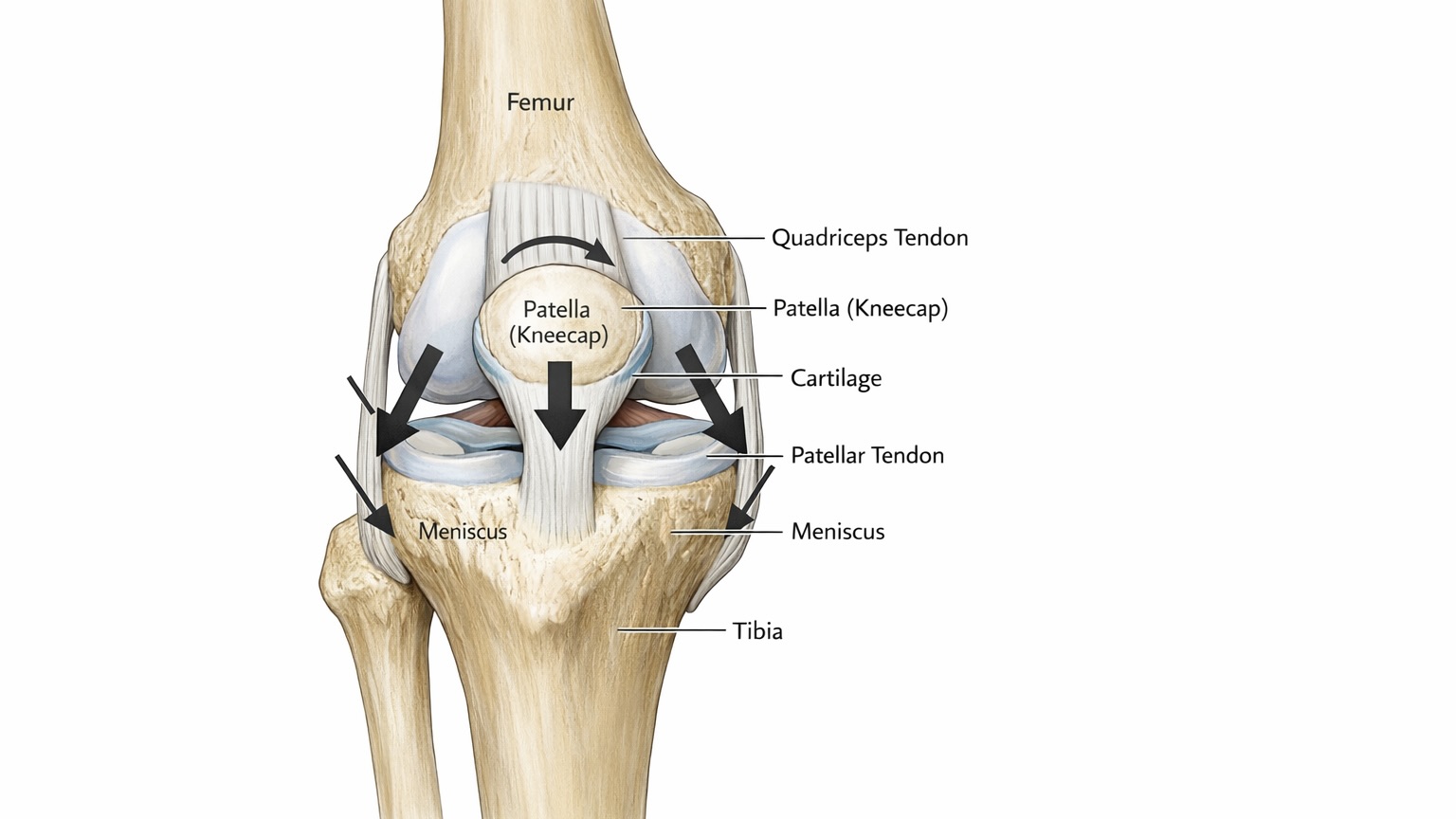
The knee is a complex hinge joint comprising the tibiofemoral and patellofemoral articulations, stabilized by bones, cartilage, ligaments, and musculotendinous units. Key structures (Figure 1) include:
- Bony Landmarks: The distal femur has medial and lateral condyles; the proximal tibia has corresponding plateaus and tibial eminence. The patella is a sesamoid bone in the quadriceps tendon. The joint surfaces are covered by articular cartilage for load distribution[2].
- Menisci: Medial and lateral menisci are fibrocartilage rings between femur and tibia. They deepen the joint, absorb shock, distribute load, and stabilize the knee. Damage to the meniscus (e.g. tears) disrupts load distribution and is strongly linked to osteoarthritis risk. Deep squatting and pivoting (common in lunges and wall balls) increase meniscal stress[3].
- Ligaments: The ACL (anterior cruciate ligament) runs from the posteromedial aspect of the lateral femoral condyle to the anterior tibial plateau. It resists anterior tibial translation and rotational forces[2]. The PCL (posterior cruciate ligament) resists posterior tibial translation. Collateral ligaments (MCL, LCL) provide medial/lateral stability. In functional movements, the ACL and PCL are critical to knee control. Non-contact ACL injuries (e.g. deceleration and cutting) involve valgus and internal rotation forces[4]. The PCL is typically injured by a direct posterior force on a flexed knee (e.g. fall on bent knee), much less common in hybrid sports.
- Muscles and Tendons: The quadriceps (vastii, rectus femoris) attach via the patellar tendon to the tibia; they extend the knee and stabilize the patellofemoral joint. The hamstrings flex the knee and counteract anterior tibial translation (protecting the ACL). Strong hip abductors/gluteals help control knee valgus. The iliotibial band (ITB) crosses the lateral knee and can contribute to lateral knee pain (ITB syndrome) in runners. Imbalances (weak hip/gluteus medius or quadriceps) affect patellar tracking and knee kinematics.
Figure 1 (not shown here) would illustrate knee structures. From a training standpoint, anatomy informs injury risk: e.g. deep knee flexion (>60°) greatly increases patellofemoral compressive force[5][6], and excessive valgus at the knee stresses the ACL. Conversely, maintaining alignment (knees over toes rather than caving inward) and moderate squat depth can reduce injurious loads[6].
Common Knee Injuries in Hybrid Athletes
Hybrid athletes combine running and loaded movements, so the knee injuries often mirror those seen in runners, jumpers, and lifters. The most common conditions include:
- Patellofemoral Pain Syndrome (PFPS): A chronic overload of the patellofemoral joint causing anterior knee pain. Symptoms are worse with running, stairs, squatting, or after sitting (the “theater sign”). In hybrid athletes, high-rep squatting (wall balls, deep lunges) and repeated running can inflame the patellar cartilage. PFPS is linked to maltracking: excessive knee flexion beyond 60°, knee translation past toes, or thigh muscle imbalance can overload the patellofemoral joint[7]. For example, deep squat movements in training produce high patellofemoral stress at 60–90° knee flexion[7]. Management emphasizes quadriceps and hip strengthening to stabilize the patella, running gait modification, and load management.
- Meniscal Tears: The medial or lateral meniscus can tear via twisting or compression. In hybrid sports, meniscal injury often occurs during a misstep, rotational movement, or deep squat under load. Risk factors include deep squatting, pivoting, or direct compression on a flexed knee[3]. Repeated lunges or heavy squat jumps may also stress the posterior horns. Acute tears cause joint line pain, swelling, and “locking” or catching.
- ACL Injuries: The ACL is frequently injured in sports. Most ACL tears in athletics are non-contact: rapid deceleration, cutting, or landing from a jump can rupture the ACL[4]. A Hyrox athlete might tear an ACL during an awkward lunge or if fatigued and poorly aligned on landing. ACL injuries produce a sharp “pop”, rapid swelling, and instability. Females have higher risk (2–9 times) likely due to anatomical and hormonal factors[8].
- PCL Injuries: Less common in sport, PCL injuries usually need a large force (e.g. fall on flexed knee). In hybrid training, PCL injury is rare but possible with heavy barbell or sled impacts to the shin. Symptoms include posterior knee pain and feeling of knee “giving way” when walking downhill.
- Patellar Tendinopathy (“Jumper's Knee”): Overuse injury of the patellar tendon at its attachment (inferior pole of the patella). Caused by repetitive high loads (jumping, heavy squats). In hybrid events, repeated deep squat thrusts (wall balls, burpees) or large-volume plyometrics can overload the tendon. Patients have localised tendon pain that worsens with loading; passive stretching often reproduces pain. Rehab emphasizes gradual tendon loading (isometrics, then eccentric loading) and addressing kinetic chain deficits[9].
Other conditions can include iliotibial band syndrome (from long runs), MCL sprains (from lateral impact in partner training), and early osteoarthritis (from accumulated joint stress). Regardless of injury, the mechanism typically involves excessive or atypical load on a knee structure: e.g. PFPS from chronic patellar compressive overload, meniscus tear from twisting under load, ACL tear from rapid valgus pivot, etc. Table 1 (below) summarizes key injuries, their mechanisms, typical recovery times, and rehab focus.
Patellofemoral Pain Syndrome (PFPS)
Typical Mechanism
Overuse and patellar maltracking, often associated with deep knee flexion, dynamic valgus, and high squat or wall-ball volumes.
Healing / Return-to-Sport Timeline
Chronic condition that typically resolves over months with appropriate load management and rehabilitation.
Rehabilitation Focus & Strength Goals
- Quadriceps strengthening (especially VMO)
- Hip abductor and external rotator strengthening
- Patellar tracking and control exercises
- Address flexibility deficits and running mechanics
Return-to-Sport (RTS) Criteria
- Pain-free single-leg squat
- ≥90% quadriceps strength symmetry
- Comfortable, full knee range of motion
Meniscal Tear
Typical Mechanism
Rotational twisting on a bent knee, deep squatting, or compressive loading during lunges and pivots.
Healing / Return-to-Sport Timeline
- Partial meniscectomy: ~1–3 months (RTS often 4–12 weeks)
- Meniscal repair: ~6–9 months
Rehabilitation Focus & Strength Goals
- Early range-of-motion restoration
- Gradual, controlled load-bearing
- Progression of closed-kinetic-chain exercises
- Restoration of quadriceps and hamstring strength
Return-to-Sport (RTS) Criteria
- Full, pain-free range of motion
- ≥90% strength symmetry (quadriceps and hamstrings, LSI)
- Successful hop and functional tests
- No joint swelling or locking
Anterior Cruciate Ligament (ACL) Rupture
Typical Mechanism
Non-contact deceleration, cutting, or landing with valgus and internal rotation; occasionally direct contact to the knee.
Healing / Return-to-Sport Timeline
- Surgical reconstruction: ~9–12 months
- Non-operative management: variable, athlete-dependent
Rehabilitation Focus & Strength Goals
- Neuromuscular training (balance, proprioception, plyometrics)
- Quadriceps and hamstring strengthening
- Gait retraining and progressive agility drills
Return-to-Sport (RTS) Criteria
- ≥90% strength symmetry and hop test LSI
- No knee effusion
- Successful agility and change-of-direction tests
- Psychological readiness and confidence
Posterior Cruciate Ligament (PCL) Injury
Typical Mechanism
Direct blow to the anterior tibia with a flexed knee (“dashboard mechanism”) or a fall onto a bent knee.
Healing / Return-to-Sport Timeline
- Partial tears (non-operative): ~3–6 months
- Complete tears with repair: ~6–9 months
Rehabilitation Focus & Strength Goals
- Emphasis on quadriceps strengthening to counter posterior tibial translation
- Avoid deep knee flexion early
- Gradual restoration of range of motion and functional loading
Return-to-Sport (RTS) Criteria
- Symmetric lower-limb strength
- Demonstrated knee stability on laxity testing
- Pain-free functional movement and sport-specific tasks
Patellar Tendinopathy (“Jumper's Knee”)
Typical Mechanism
Repetitive tensile overload from jumping, squatting, and high-volume landing activities.
Healing / Return-to-Sport Timeline
Gradual recovery, often 3–6 months; chronic cases may persist longer without proper load management.
Rehabilitation Focus & Strength Goals
- Progressive tendon loading (isometric → eccentric → heavy slow resistance)
- Quadriceps and hip strengthening
- Training load modification and activity pacing
Return-to-Sport (RTS) Criteria
- Acceptable symptom levels (e.g. VISA-P score improvement)
- Ability to perform jumping and landing tasks with tolerable pain
- No post-exercise symptom flare beyond 24 hours
Above. Common knee injuries in hybrid athletes: mechanisms, timelines, rehab focus, and RTS criteria. (“LSI” = limb symmetry index, comparing injured to uninjured side.) For surgical repairs (ACL/PCL, meniscus), longer timelines apply. Note all rehab emphasizes 90–100% strength symmetry (e.g. quadriceps strength), normalized movement mechanics, and no significant pain/effusion before full competition.
Injury Mechanisms and Healing Timelines
Patellofemoral Pain (PFPS): PFPS is typically insidious. Training errors (sudden volume jump, many deep squats/wall balls) load the patellofemoral joint excessively[7]. A squat at 60–90° knee flexion dramatically raises patellofemoral compressive force, especially if the knee moves anteriorly past the toes[7]. Pain arises from cartilage or subchondral overload. PFPS is not a tissue tear, so healing means pain resolution through load reduction. Most cases improve with structured rehab over weeks to months. There is no exact biological “healing time”, but athletes typically need 6–12 weeks of controlled training modifications and strengthening to resolve symptoms.
Meniscal Tears: The meniscus can tear acutely (e.g. landing awkwardly in a lunge) or chronically (degeneration from overuse). Once torn, blood supply to the inner meniscus is poor, so tears often do not “heal” without surgical repair. Consequently, recovery depends on treatment:
- Partial Meniscectomy (removal of torn fragment): Weight-bearing and motion typically begin immediately, with progressive exercises. Return to light activities often at 4–6 weeks; higher-level RTS (impact sport/hybrid training) by ~8–12 weeks[10] if strength/recovery criteria are met.
- Meniscal Repair: The torn meniscus is sutured. Healing requires biological repair (6–12 weeks). Weight-bearing is limited initially (often toe-touch or partial for 4–6 weeks) and flexion may be restricted. Full healing is slower; return to full sports is usually 6–9 months[10]. Surgeons often allow progression based on observed healing (MRI/clinical exam).
- Conservative (Non-op) Management: For degenerative tears, some athletes rehabilitate without surgery through time. Gradual rehab (similar to repair protocol) is used. Outcomes can be comparable in select patients[12] but require patience.
ACL Injury: ACL ruptures severely destabilize the knee. Post-ACL injury (operative or not), healing is very protracted. Rehabilitation is structured in phases (MOON protocol, etc.)[11]. Typical timeline (ACL reconstruction): light jogging ~3 months, agility ~6 months, full sport at 9–12 months[11]. Return is not time-driven alone: criteria (strength, function, psychological readiness) must be met. Even with excellent rehab, only about half return to pre-injury competition level by 2 years[13], highlighting the challenge.
PCL Injury: Often treated non-operatively if isolated. Healing (ligament stretch) takes months. With repair surgery, brace/protection is needed ~3–6 weeks, then rehab. Return to high-intensity sport often by 6–9 months, though strict guidelines vary.
Tendinopathy: Tendons can be overloaded repeatedly with minimal “down time.” Patellar tendons adapt slowly; symptoms wax and wane. An acute flare may quiet in weeks with load reduction and isometric exercises. However, chronic tendinopathy often requires months of graduated loading (e.g. eccentric or heavy slow resistance) to resolve. Return to full activity is gradual and guided by symptom tolerance, not just a fixed date.
Strengthening Protocols: Rehabilitation protocols are diagnosis-specific but universally emphasize quadriceps and hip muscle strengthening, neuromuscular (balance) training, and progressive loading. For example:
- PFPS Rehab: Focus on quadriceps (especially vastus medialis oblique), hip abductors/external rotators, and core stability. Single-leg squats, clamshells, step-downs are common. Avoid deep squats initially[6]; start in shallow ranges (<50° knee flexion[5]) and only progress pain-free.[5][6]
- Meniscus Rehab: Early phase (post-surgery) allows gentle range-of-motion and isometric quads. By 4–6 weeks (post-menisectomy) or later (post-repair), add closed-chain squats, stationary bike. Gradually introduce lunges and agility as pain allows. Emphasize symmetry of strength.
- ACL Rehab: Begin with crutch-walking and gentle motion, then progressive weight-bearing. Early focus on quadriceps activation, hamstring strength, and hip control. Later phases include functional movements (lunges, hops, treadmill running). Neuromuscular training (plyometrics, change-of-direction drills) is integrated after ~3–4 months. By ~6–9 months, sport-specific agility and plyometrics are performed. Again, progression is criterion-based (no swelling, full ROM, ≥90% strength symmetry).[11]
- PCL Rehab: Initially limit posterior tibial shear (brace in extension). Focus on quadriceps strength (to pull tibia forward) and closed-chain exercises. By 6–12 weeks, progress to functional exercises, with return similar to ACL timelines.
Throughout, load management is critical. Athletes gradually transition from bilateral to unilateral exercises, closed-chain to open-chain as stability returns, always guided by pain and swelling. Plyometric activities (jump training) are introduced cautiously, given knee sensitivity.
Return-to-Sport (RTS) Criteria and Long-Term Joint Health
Return-to-Sport Criteria: Evidence stresses a criteria-based approach over arbitrary timelines[14][11]. Before resuming full competition, athletes should typically demonstrate:
- Strength Symmetry: Often ≥90–100% limb symmetry index (LSI) in quadriceps and hamstrings (isometric or isokinetic strength)[14][11]. This reduces reinjury risk.
- Functional Tests: Hop tests (single-leg hop for distance/time), agility drills, and sport-specific drills at target pace. These must be pain-free and within 10% of uninjured limb performance.
- Full, Pain-free ROM: Complete knee extension and flexion without pain or swelling.
- Neuromuscular Control: Demonstrated ability to land, cut, and squat without dynamic valgus or balance loss.
- Subjective Readiness: Athlete confidence and absence of fear (addressed in psychological section). Clinicians may use scales (e.g. ACL-Return to Sport after Injury scale).
Published guidelines (Ardern et al.) emphasize that mere elapsed time is insufficient – functional and psychological readiness matter[14][11]. For example, even if 9 months post-ACL, an athlete lacking ≥90% quad strength or still limping should not compete.
Long-Term Joint Health: Any knee injury incurs long-term risks. Meniscal loss and ACL rupture dramatically increase osteoarthritis risk in 10–20 years. Systematic reviews show ACL injury roughly 4–6× higher knee OA risk compared to uninjured knees[15], especially if cartilage was damaged. Meniscectomy accelerates degeneration in the affected compartment. PFPS and chronic maltracking may also predispose to patellofemoral arthritis. Accordingly, rehab should aim not only for RTS but also joint preservation: balanced strength, joint-friendly training, and appropriate conditioning to minimize aberrant loads on healing tissues.
A multi-year rehabilitation horizon is prudent: Athletes should continue knee exercises (strength/flexibility) long after return to competition to sustain joint homeostasis. For example, post-ACL patients are advised to maintain quadriceps strength and cardiovascular fitness (e.g. swimming, cycling) indefinitely[11]. Weight management and anti-inflammatory nutrition may also help protect joint cartilage in the long term.
Knee Loading in Hybrid Sport Modalities
Hybrid workouts subject the knee to varied loading patterns. Key insights (with biomechanical evidence) include:
- Running (1 km laps): Each footstrike generates vertical ground-reaction forces ≈2–3× bodyweight on the leg. Patellofemoral compressive forces during running can reach ~5–7× bodyweight[16], peaking in mid-stance (~15% of gait cycle) when knee flexion is maximal[17]. Stride mechanics modulate this: shorter stride (higher cadence) reduces patellofemoral force by ~14%, whereas overstriding increases it by ~15%[16]. Coaches might cue athletes to adopt a slightly quicker turnover to ease patellar stress if PFPS is an issue. Over a 1 km run, repetitive loading accrues; thus, pacing of laps and adequate rest between functional stations are important.
- Squats / Wall Balls: Dynamic squats (e.g. catch of a wall ball) produce high knee loads, especially at deep flexion. Biomechanical analysis shows patellofemoral stress escalates with knee flexion angle and added weight[5]. Training data suggest staying in the functional range (0–50° knee flexion) yields the least compressive force[5]. In practice, wall-ball or burpee squat depth can be modified (e.g. stop at parallel) for injured athletes. Even a bodyweight squat to 90° has more PF stress than a shallow squat[5]. Coaching tip: emphasize knee tracking and avoid letting knees collapse inwards (valgus) during squats to reduce joint stress.
- Lunges: Forward lunges load the lead knee with a combination of compressive and shear forces. A recent study showed patellofemoral joint force in the lunge knee rises sharply as knee flexion deepens[18]. For instance, during a lunging descent to 100° knee flexion, PF stress peaks. The study's conclusion was to progress lunge depth gradually: start with shallow lunges (0–30°), then increase to moderate (0–60°), then deep (up to 100°) only as tolerated[19]. In HYROX, lunges are often performed fatigued; coaches should ensure technique isn't sacrificed and consider varied lunge lengths.
- Sled Push/Pull: Pushing or pulling a weighted sled involves deep knee flexion under load. Although less research exists, sled exercises engage quadriceps intensely with relatively low eccentric impact (due to the horizontal nature)[20]. The knee flexion angle can be very deep, so caution is needed: ensure athletes maintain a neutral spine and knee alignment (knees over toes) to avoid undue shear. Sled pushing is often considered knee-friendly due to distributed force, but it still loads the patella and quadriceps tendons. Monitoring fatigue is key to prevent form breakdown (e.g. knee valgus under fatigue).
- Jumping/Burpees: These high-impact moves produce very high instantaneous forces. We have not focused on jumping injuries here, but note that long bouts of burpees or box jumps can aggravate PFPS or cause tendon strain if introduced too early in rehab.
In summary, hybrid training heavily loads the knee across multiple planes. Coaches should periodize volume (especially of deep knee exercises), emphasize movement quality (e.g. soft landings, knee tracking), and allow recovery (complete squat depth only when prepared). Empirical data guide rehab: e.g. squatting 0–50° is safe[5], and gradually increasing jump/lunge depth reduces injury risk[19]. Conditioning programs that incorporate plyometrics and gait cues from sports medicine (e.g. increase step rate) can help manage knee load during runs[16].
Injury Prevention Strategies
The best rehab is prevention. Exercise-based injury prevention programs (IPEPs) are proven to cut knee injury rates substantially. Meta-analyses show neuromuscular and proprioceptive training can reduce overall knee injury incidence by roughly a quarter, and anterior cruciate ligament injuries by about half[21]. Key prevention elements include:
- Neuromuscular Training: Balance and coordination drills (e.g. single-leg stance, wobble boards), hip/core stability work, and deceleration training teach the body to control knee alignment. Programs like FIFA 11 (soccer warm-up) or PEP (prevent injury program) integrate these and have strong evidence.
- Plyometrics and Agility: Jump-landing and cutting exercises teach safe mechanics (soft landing, knee over toes). For example, teaching athletes to land with less knee valgus and more hip flexion reduces ACL strain.
- Strengthening: Emphasis on quadriceps/hamstrings and hip abductors (glute medius) corrects muscle imbalances that contribute to PFPS and ACL risk. A stop squat at 90° or lunges with focus on knee alignment can build strength in a controlled range.
- Flexibility and Warm-up: Proper warm-up (dynamic stretching, light running) primes tissues. Some evidence suggests hamstring and calf flexibility can indirectly affect knee loads.
Importantly, prevention should be sport-specific. For hybrid athletes, this means training that simulates the HYROX format: e.g. fatigue runs followed by transitional movements. A weekly prevention routine (10–20 minutes) added to training can include lunges with stabilized trunk, low squat holds, single-leg hops, and planks. High compliance is critical – programs are most effective when done regularly (2–3×/week)[22].
Some examples of progressive exercises and loading recommendations for common rehab and prevention moves (Note: always individualize based on injury stage and tolerance):
Squat Depth Progression
Low Load (Beginner)
- 0–50° knee flexion (shallow squat)
- Emphasis on pain-free range, knee alignment, and trunk control
Moderate Load (Intermediate)
- 50–80° knee flexion
- Introduce moderate resistance while maintaining control through depth
High Load (Advanced)
- Full squat: 0–100° knee flexion (parallel or below)
- Used only when pain-free strength, mobility, and neuromuscular control are established
Lunge Progression
Low Load (Beginner)
- Small step lunge with <30° knee flexion
- Focus on balance, upright torso, and controlled descent
Moderate Load (Intermediate)
- Medium step length with 30–60° knee flexion
- Gradual increase in load and range while maintaining knee-over-toe alignment
High Load (Advanced)
- Deep lunge with 60–100° knee flexion
- Suitable for advanced athletes with full strength and tendon tolerance
Single-Leg Balance Progression
Low Load (Beginner)
- Single-leg stance, eyes open on a firm surface
- Emphasis on hip and knee alignment
Moderate Load (Intermediate)
- Eyes closed or unstable surface (e.g. wobble cushion)
- Challenges proprioception and neuromuscular control
High Load (Advanced)
- Add external perturbations (e.g. ball toss, partner taps)
- Mimics unpredictable sport demands
Jumping and Landing Progression
Low Load (Beginner)
- Small hops with emphasis on quiet, soft landings
- Teach knee-over-toe alignment and shock absorption
Moderate Load (Intermediate)
- Box jumps ≤12″ or plyometric step-ups
- Focus on controlled take-off and landing mechanics
High Load (Advanced)
- Depth jumps and continuous jump sequences
- Used only when strength, tendon tolerance, and landing mechanics are robust
Above: Progression of knee-loading exercises (shallow to deep) based on flexion range and complexity. Start in lower ranges and advance as tolerated to minimize patellofemoral stress[5][19].
In addition to exercise, program design aids prevention. Gradual build-up of volume (avoid sudden spikes in run mileage or rep count), cross-training (cycling/rowing to offload knees), and adequate rest days reduce overuse. Footwear and running surface adjustments (softer treadmills vs hard pavement) can also modify knee loading.
Evidence supports that structured warm-up programs (dynamic stretches, movement prep) reduce knee injury incidence by ~25–30%[22][21]. Therefore, every hybrid training plan should include functional warm-ups (e.g. walking lunges, ankle pumps, mini-squats, jump-skips) and neuromuscular drills at least twice weekly. Embedding these preventive exercises into routine training helps keep knees robust through the season.
Psychological Coping in Rehabilitation
Knee injuries can be as mentally challenging as physical. Athletes often face anxiety and frustration, especially in long rehab phases (e.g. after ACL reconstruction). Research highlights that:
- Fear of Re-injury: A very common barrier. Athletes report intense fear/anxiety when approaching RTS[13]. This can manifest as reluctance to fully load the knee or hesitancy in cutting/jumping.
- Role of Autonomy: Injured athletes highly value being actively involved in their rehab (self-efficacy). Those who engage in goal-setting, track progress, and have input feel more control and show better adherence[23]. A sense of independence and competence is motivating.
- Social Support: Coaches, teammates, and clinicians providing encouragement and realistic feedback improve outlook. Feelings of isolation are common during rehab; group rehabilitation or team involvement can mitigate this.
- Expectations Management: Athletes often have unrealistic timetables. Clear guidance on phases/goals (e.g. “you should walk unassisted by week 3”) helps manage anxiety. Celebrating small milestones keeps morale high.
Clinicians and coaches should address psychological factors explicitly. For example, using imagery (visualizing successful performance), relaxation techniques, and graded exposure to activity (e.g. slowly reintroduce drills) can rebuild confidence. Discussing fear and setting incremental goals (like “today we'll jog half a lap pain-free”) makes progression tangible.
In short, psychosocial care is part of rehab. A multidisciplinary approach – combining physical therapy with sport psychology or counseling – is ideal for severe injuries. At minimum, acknowledge the stress: “It's normal to feel nervous about your knee; let's work together to regain trust in it.”
Conclusion
Knee health is critical for hybrid athletes whose sport fuses endurance and power. Clinicians and coaches must blend anatomy knowledge with biomechanics and evidence-based rehab to optimize outcomes. Key points:
- Anatomical insight: Understanding knee structure guides both diagnosis and exercise selection (e.g. protecting ACL with neuromuscular control, protecting patellofemoral joint by limiting deep flexion).
- Common injuries: PFPS, meniscal tears, ACL/PCL injuries, and tendinopathy predominate in hybrid sports. Each has specific mechanisms and rehab needs. Injury tables (Tables 1–2) summarize their rehab pathways and load progressions.
- Loading nuances: Hybrid events involve diverse knee loads – from the compressive stresses of squatting to the high impacts of running. Training and rehab must respect these loads (e.g. modify squat depth or running mechanics) to prevent overload injuries.
- Rehab and RTS: Criteria-based rehab ensures safe return. Focus on restoring strength symmetry and movement quality. Full recovery may be long (especially for ACL, meniscal repair) – patience and careful periodization are vital.
- Prevention and Psychology: Proactive neuromuscular/prehab programs measurably cut knee injury rates. And throughout recovery, addressing the athlete's mindset (fostering autonomy and managing fear) helps complete the picture.
By integrating these clinical and coaching perspectives – from joint anatomy to prevention drills – elite hybrid athletes can train and compete with healthier knees and smarter strategies. Ongoing surveillance and research are needed, but current literature (JOSPT, BJSM, sports medicine reviews) provides a solid foundation for this unique athletic population.
Sources: Authoritative reviews and studies from sports medicine and physiotherapy literature were used throughout (e.g. JOSPT, BJSM, Med Sci Sports Exerc)[24][7][3][10][9][4][5][16][6][19][1][11][21]. These provide evidence on knee biomechanics, injury rehab timelines, strengthening protocols, and prevention efficacy. All recommendations above align with peer-reviewed guidelines and current best practice in sports rehabilitation.
[1] Hyrox: The Hybrid Fitness Race Mixing Endurance and Strength Training - Los Angeles Times
https://www.latimes.com/fitness/workouts/story/hyrox-hybrid-fitness-race
[2] [4] [8] Anterior Cruciate Ligament (ACL) Injury - Physiopedia
https://www.physio-pedia.com/Anterior_Cruciate_Ligament_(ACL)_Injury
[3] [10] [12] [14] The formal EU‐US Meniscus Rehabilitation 2024 Consensus: An ESSKA‐AOSSM‐AASPT initiative. Part II—Prevention, non‐operative treatment and return to sport - PMC
https://pmc.ncbi.nlm.nih.gov/articles/PMC12310080/
[5] Patellofemoral joint force and stress during the wall squat and one-leg squat - PubMed
https://pubmed.ncbi.nlm.nih.gov/19276845/
[6] Knee Joint Loading in Healthy Adults During Functional Exercises: Implications for Rehabilitation Guidelines | Request PDF
[7] Patellofemoral Pain Syndrome Risk Associated with Squats: A Systematic Review - PubMed
https://pubmed.ncbi.nlm.nih.gov/35954598/
[9] (PDF) Patellar Tendinopathy: Clinical Diagnosis, Load Management, and Advice for Challenging Case Presentations
[11] ACL Rehabilitation Program | MOON Knee ACL Research
https://acltear.info/anterior-cruciate-ligament-rehabilitation/
[13] [15] [23] [24] (PDF) Psychological, social and contextual factors across recovery stages following a sport-related knee injury: A scoping review
[16] [17] Increasing Running Step Rate Reduces Patellofemoral Joint Forces - PMC
https://pmc.ncbi.nlm.nih.gov/articles/PMC3925193/
[18] [19] Medicine & Science in Sports & Exercise
[20] [PDF] An Investigation of the Sled Push Exercise - Digital Commons@ETSU
https://dc.etsu.edu/cgi/viewcontent.cgi?article=3783&context=etd
[21] (PDF) Effectiveness of Knee Injury and Anterior Cruciate Ligament Tear Prevention Programs: A Meta-Analysis
[22] Effectiveness of Knee Injury and Anterior Cruciate Ligament Tear Prevention Programs: A Meta-Analysis | PLOS One
https://journals.plos.org/plosone/article?id=10.1371/journal.pone.0144063