Rhabdomyolysis in Athletes: When to Stop and Get Help
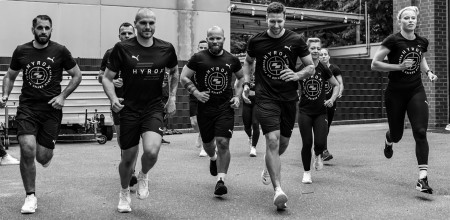
By Ayda Page | HYROX Performance Coach & Master Trainer | Warrior Performance Lab
The recent news from the running community is heartbreaking. My thoughts are with the family, friends and everyone affected.
It also made me want to have a conversation with our athletes. We spend so much time talking about preparation, pacing, nutrition and how to keep going when a race becomes difficult. We need to give just as much attention to knowing when to stop and ask for help.
As a coach and an athlete, I understand how much a race can mean. You have trained for it, organized your life around it and imagined crossing that finish line. Stopping can feel like a very big decision.
I want you to know that you can make that decision. You deserve support when something feels seriously wrong.
One condition athletes should understand is rhabdomyolysis, often called rhabdo. Let's look at what it means, the warning signs and what to do if you are concerned.
If you have severe muscle pain beyond what you would expect, unusual substantial weakness, tea- or cola-colored urine, or significant painful swelling after exercise, stop and seek immediate medical assessment. You do not need every symptom. [2,4]
What happens when someone develops rhabdo?
Rhabdomyolysis occurs when damaged muscle releases its contents, including proteins and electrolytes, into the bloodstream. In serious cases, this can injure the kidneys and disturb heart rhythm. [1]
It can happen to people who are well trained. Fitness does not provide complete protection, and having completed a similar workout before does not rule it out. [1]
I would also be careful about drawing conclusions from a news report. We cannot work backward from a tragic outcome and assume an athlete was unprepared, ignored symptoms or could certainly have prevented what happened. The useful response is to understand the condition and improve how we support each other.
When soreness deserves a closer look
Most athletes know the stiffness that can follow an unfamiliar workout. Delayed-onset muscle soreness, or DOMS, commonly starts around 12-24 hours after exercise and is most noticeable around 24-72 hours. Tenderness and a temporary reduction in strength can occur, particularly after unfamiliar lowering or landing movements. [6]
But there is an important limit to that information: timing alone cannot tell ordinary soreness from rhabdo. Rhabdo symptoms can also appear hours or days after exercise. [2]
Pay attention to the whole picture. Is the pain much worse than you would expect from the work you did? Are familiar movements unusually difficult? Is there substantial swelling? Are symptoms becoming more severe?
Concerning signs include:
- Severe, unexpected muscle pain or cramping. The discomfort is out of proportion to what you would normally expect from the session.
- Marked weakness. Normal movements or familiar activities become unexpectedly difficult.
- Tea- or cola-colored urine. This needs medical attention; do not assume it is simply dehydration.
- Significant muscle swelling, especially alongside severe pain or restricted movement. [2,4]
You do not need to tick every box. Normal-looking urine does not rule out rhabdo. A symptom list can help you recognize concern; it cannot diagnose you or clear you to continue. [2,4]
What to do if you are concerned
Stop exercising and seek medical assessment immediately. At a race, tell the medical team what is happening. If symptoms are severe or rapidly worsening, or you cannot obtain prompt assessment elsewhere, go to an emergency department. [1,2,4]
Please do not try to solve this by drinking water and waiting for the next morning. Hydration matters, but it does not replace assessment or guarantee protection from rhabdo. [1]
Tell the clinician what you did, when the symptoms began, and whether your training recently changed. Mention heat exposure, illness, previous episodes, and any medications or supplements. Assessment may include creatine kinase, or CK, alongside kidney function and electrolytes. Results need to be interpreted with your symptoms and exercise history; repeat tests may be necessary. [4]
If rhabdo is diagnosed, returning to training should follow an individual medical plan. Feeling better or seeing one improved test result is not a reason to set your own return date. [4]
What this means for running and HYROX training
Unfamiliar exercise, abrupt increases in workload and demanding conditions can contribute to exertional rhabdo. This can include familiar movements performed at a volume or intensity the athlete is not accustomed to. [3,4]
For HYROX, I want us to consider the whole session: the running, the lunges, the burpees, the wall balls and the work you have already accumulated that week. A movement being familiar does not mean every combination of repetitions, pace and fatigue is equally appropriate.
This is where thoughtful programming matters:
- Progress unfamiliar work gradually, including the total repetitions and duration.
- Scale your return after illness or time away instead of trying to make up missed sessions.
- Adjust the workload for heat and humidity, and allow recovery between demanding sessions. [3,4]
Those principles help us manage avoidable stress. They cannot eliminate every risk or tell us what caused an individual athlete's illness.
From a coaching perspective, I also want to know when a session affected you differently from usual. “I could barely move normally afterward” is useful information. Please tell your coach rather than feeling you need to make the session sound successful.
Training partners need a plan, too
If someone tells you they feel seriously unwell, help them get assessed. The encouragement they need may be permission to stop and someone to stay with them while help arrives.
A collapse needs an immediate response. For an adult who is unresponsive AND not breathing normally, including only gasping:
- Call 911, or your local emergency number. Use speakerphone and follow the dispatcher's instructions.
- Start CPR. Push hard and fast in the center of the chest at 100-120 compressions per minute, allowing the chest to rise fully between pushes.
- Have someone bring an AED, turn it on and follow its prompts. Continue CPR until the person begins breathing normally or emergency responders take over. [5]
You do not need to identify the cause before starting that response. Coaches and training partners can prepare by taking a CPR/AED course and knowing where the nearest AED is kept.
You have permission to stop
I want my athletes to feel confident asking for help. You do not need to apologize for leaving a workout unfinished or stepping off a race course because you are worried about your health.
We can adjust a training plan. We can talk about another race. First, let's make sure you get the care you need.
Please share this conversation with your training partner. Agree, before the next hard session, that you will listen when one of you says something feels wrong.
Train with intention. Speak up early. Support each other.
This article provides general education and cannot diagnose symptoms or replace individual medical assessment. Suspected rhabdomyolysis requires prompt medical care.
References
- CDC / NIOSH. Rhabdomyolysis and Work.
- CDC / NIOSH. Signs and Symptoms of Rhabdomyolysis.
- NCAA. Sports Medicine Handbook, Guideline 4C: Exertional Rhabdomyolysis.
- CHAMP / WHEC. Clinical Practice Guideline for the Management of Exertional Rhabdomyolysis in Warfighters, September 2025. This article draws on general clinical principles, not military diagnostic thresholds or return-to-duty schedules.
- American Heart Association. Treatment of Cardiac Arrest.
- American College of Sports Medicine. Delayed Onset Muscle Soreness (DOMS).
Sources checked November 4, 2026.