
HYROX® R.A.M.P.: The Smart Warm-Up Strategy for Better Race Performance
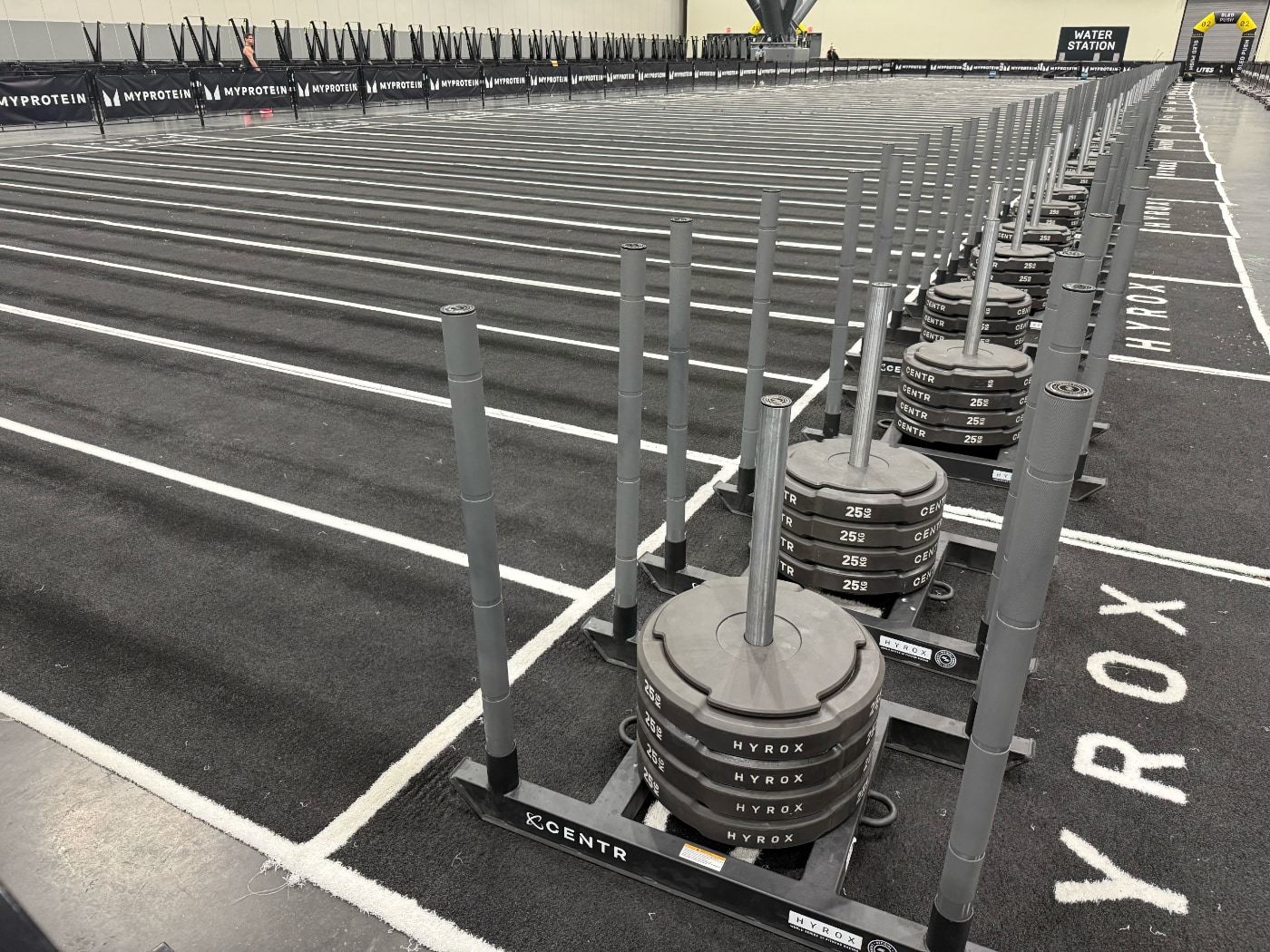
If you want to perform well in HYROX®, your race does not begin at the first run. It begins with how you prepare your body before the start.
HYROX demands much more than general fitness. Athletes need to run efficiently, handle repeated transitions, stay mechanically strong under fatigue, and move well across very different stations. That is exactly why warm-up quality matters. A rushed or random warm-up can leave you feeling stiff, flat, or unnecessarily tired before the race even begins.
This is where R.A.M.P. comes in. R.A.M.P. is a structured warm-up framework built around four steps: Raise, Activate, Mobilise, and Potentiate. Instead of guessing what to do before training or racing, it gives athletes a simple system to prepare the body for performance.
That matters because warm-up research consistently favors purposeful, progressive preparation over random routines or long static-stretch-only approaches when performance is the goal. The objective is not to get tired before the start. It is to elevate temperature, activate key tissues, improve useful range of motion, and arrive ready to express force and coordination.
Key takeaway: A good HYROX warm-up should improve readiness, coordination, and race-specific movement without creating early fatigue.
Why warm-up quality matters in HYROX
HYROX® is a long, demanding event with constant transitions. Athletes move from steady running into high-force stations like sled push and sled pull, then back into running again. Later in the race, fatigue also challenges mechanics, posture, timing, and movement efficiency.
That means the warm-up has a very specific job. It should raise body temperature and circulation, improve joint readiness, activate key muscles for running and station work, sharpen posture, trunk control, and rhythm, and rehearse race-relevant movement without draining the tank.
Too little warm-up, and you start cold. Too much, and you start tired. The sweet spot is preparation without fatigue.
The four parts of a HYROX® R.A.M.P. warm-up
Raise
This is the first stage of the warm-up. The goal is to gradually increase body temperature, heart rate, breathing rate, and blood flow. This helps the body move more freely and prepares the nervous system for work.
For HYROX®, this might include easy jogging, light rowing, SkiErg, marching, skipping, or lateral movement patterns. The intensity should stay controlled. You are not trying to win the warm-up. You are simply getting the system online.
Activate
This stage focuses on turning on the muscles that need to do their job well during the race.
For HYROX®, that usually means glutes, calves, trunk stabilisers, upper back, and shoulder support muscles. These areas play a major role in running posture, sled mechanics, wall balls, carries, and lunges.
Simple activation drills can make a real difference in how stable and connected you feel once the race begins. Examples include glute bridges, mini-band walks, calf raises, dead bugs, scapular control drills, and trunk-bracing patterns.
Mobilise
Mobilisation is about preparing useful range of motion. This is not the time for long passive stretching. Instead, focus on dynamic mobility that improves positions you actually need in HYROX®.
Useful areas to target include ankles, hips, thoracic spine, and shoulders. Good mobilisation can help improve running rhythm, lunge quality, wall-ball mechanics, and overall movement efficiency under fatigue.
Think of this phase as opening doors, not forcing flexibility.
Potentiate
This is the final bridge into performance. Potentiation means gradually introducing faster, sharper, more race-specific movement. The purpose is to prepare the body and nervous system for the speed, rhythm, and coordination demands of competition.
For HYROX®, that might include a few short accelerations, quick footwork drills, a handful of burpee broad jumps, a few light wall balls, or a brief sled feel if equipment is available.
The key here is control. This is not the moment to do a hard conditioning piece before your actual race.
What a practical HYROX® R.A.M.P. warm-up can look like
A simple HYROX® R.A.M.P. warm-up can usually be done in around 10 to 15 minutes:
- Raise: 3 to 4 minutes of easy jog, row, or SkiErg
- Activate: glute bridges, calf raises, trunk stability, band work, scapular activation
- Mobilise: ankle rocks, walking lunges with reach, thoracic rotation, hip openers
- Potentiate: 2 to 3 short accelerations, a few quick reactive drills, and a few race-specific movement reps
This kind of structure is enough to prepare the body while keeping energy available for the event itself.
Timing matters too. HYROX race day requires athletes to move from the warm-up area into the start tunnel before their assigned wave, so finishing too early can leave you cooling down before the race even begins. Finish close enough to the start to keep the effect, but not so late that the process feels rushed or chaotic.
Common mistakes athletes make
The biggest mistake is treating warm-up as either unimportant or excessive. Some athletes barely warm up at all. Others do so much that they begin the race half-fatigued. Both are problems.
- doing too much static stretching
- spending too long warming up
- skipping race-specific movement rehearsal
- using high-fatigue efforts before the start
- warming up too early and then cooling down before race time
A good warm-up should leave you feeling ready, not drained.
Final thought
HYROX® R.A.M.P. works best when athletes understand what it is really for. It is not about doing more. It is about doing the right things in the right order.
When used properly, R.A.M.P. helps athletes arrive at the start line warmer, sharper, more coordinated, and better prepared for the demands of the race. In a sport where performance depends on smooth transitions, efficient movement, and fatigue resistance, that matters.
Your warm-up is not a small detail. It is your first performance decision of the day.
References
1. Jeffreys, I. (2007). Warm-up revisited: The ramp method of optimizing performance preparation. Professional Strength and Conditioning, 6, 12-18.
2. McGowan, C. J., Pyne, D. B., Thompson, K. G., & Rattray, B. (2015). Warm-Up Strategies for Sport and Exercise: Mechanisms and Applications. Sports Medicine, 45(11), 1523-1546. doi: 10.1007/s40279-015-0376-x
3. Fradkin, A. J., Zazryn, T. R., & Smoliga, J. M. (2010). Effects of warming-up on physical performance: A systematic review with meta-analysis. Journal of Strength and Conditioning Research, 24(1), 140-148. doi: 10.1519/JSC.0b013e3181c643a0
4. Li, F. Y., Guo, C. G., Li, H. S., Xu, H. R., & Sun, P. (2023). A systematic review and net meta-analysis of the effects of different warm-up methods on the acute effects of lower limb explosive strength. BMC Sports Science, Medicine and Rehabilitation, 15(1), 106. doi: 10.1186/s13102-023-00703-6
5. Brandt, T., Ebel, C., Lebahn, C., & Schmidt, A. (2025). Acute physiological responses and performance determinants in Hyrox© - a new running-focused high intensity functional fitness trend. Frontiers in Physiology, 16, 1519240. doi: 10.3389/fphys.2025.1519240
6. HYROX. (2025). HYROX Singles Rulebook 25/26. Official rulebook. Available at: hyrox.com/rulebook