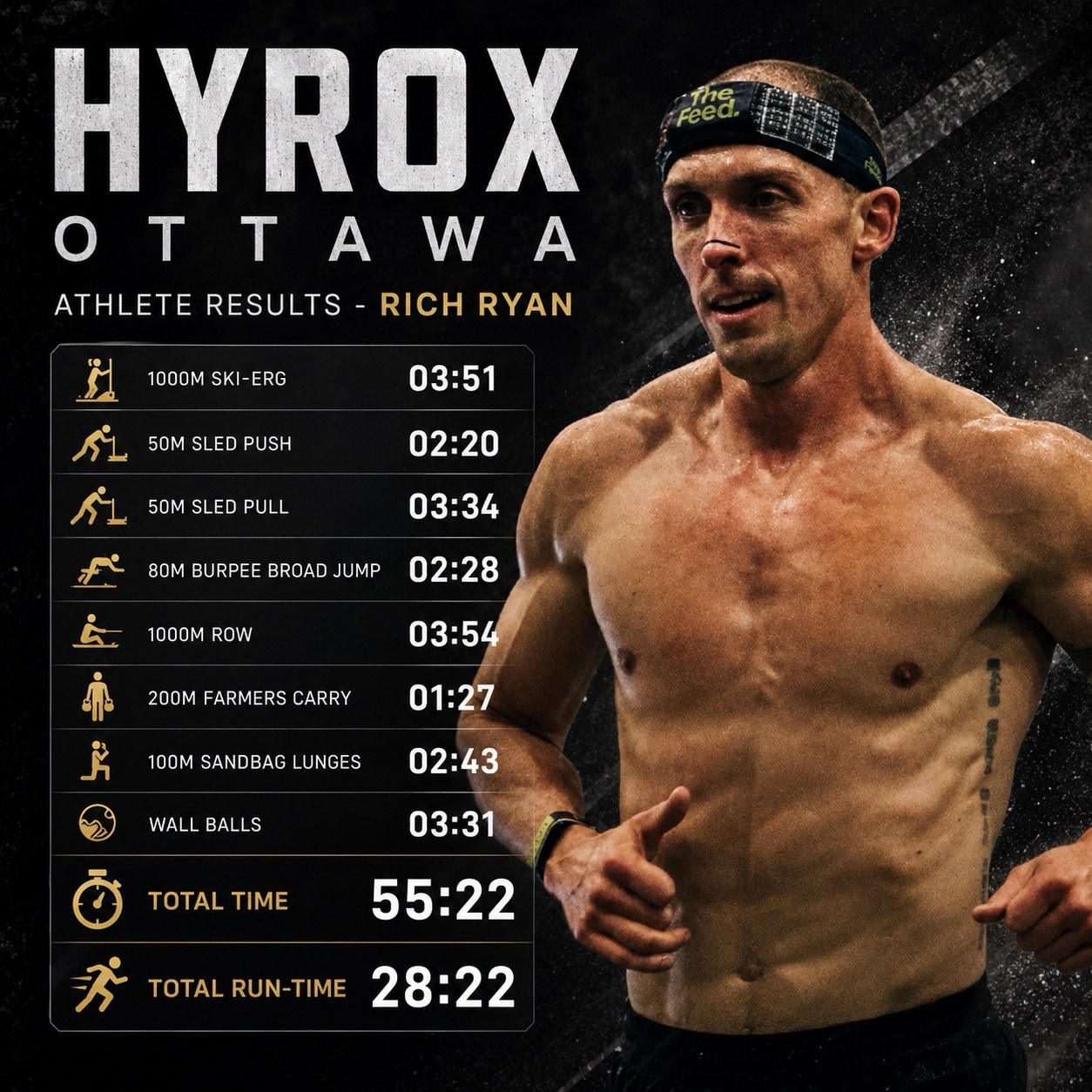

Rich Ryan's 55:22 at HYROX Ottawa: A WPL Test-Train-Analyze Breakdown
Rich Ryan's 55:22 at HYROX Ottawa shows how elite HYROX is won: repeatable running, station control, and WPL's Test-Train-Analyze model.
Rich Ryan's 55:22 at HYROX Ottawa: A WPL Test-Train-Analyze Breakdown
Rich Ryan's 55:22 at HYROX Ottawa shows how elite HYROX is won: repeatable running, station control, and WPL's Test-Train-Analyze model.
HRV-How to Use Recovery Data Without Overcomplicating Training
HYROX® training asks a lot from the body: repeated running, sled work, wall balls, lunges, loaded carries, and strength endurance. HRV can help you spot when your body is ready to push and when a smart adjustment will give you a better return.
HYROX Youngstars: Evidence Gaps, Safety Priorities, and a Research-and-Policy Roadmap
This research article examines the emergence of youth participation in HYROX (“Youngstars”) through a scientific and risk-based lens, analyzing the current lack of evidence around physiological demands, injury risk, and long-term development in young athletes. It synthesizes existing knowledge while outlining key safety priorities and proposing a structured research and policy roadmap to guide responsible implementation of youth hybrid competition.
A NIRS-Informed Performance Model for HYROX
This article introduces a performance model for HYROX that uses wearable near-infrared spectroscopy (NIRS) to track real-time muscle oxygenation, reframing performance as a balance between local muscular fatigue and systemic energy demand rather than traditional metrics alone. It shows how SmO₂ patterns can identify pacing errors, fatigue buildup, and individual limiters, enabling more precise, data-driven training and race execution decisions.
Who breaks HYROX sub-50 first?
Using archived official HYROX athlete result sheets from London, Warsaw, Phoenix, Brisbane, and Miami, plus the HYROX Singles Rulebook and the current peer-reviewed HYROX literature, this review asks who is most likely to break 50 minutes in men's HYROX first.
Altitude Training for HYROX Athletes: Evidence Synthesis and Practical Programming Guide
Altitude training can enhance oxygen delivery, aerobic capacity, and endurance performance—but only with sufficient exposure and correct programming. This study breaks down the evidence and shows how HYROX athletes can apply altitude strategies for real-world performance gains.
Dehydration Is Not Just a Performance Problem
Dehydration in HYROX isn't just about reduced performance—it also impacts decision-making, pacing control, recovery, and overall system function under fatigue. The article argues that hydration should be treated as a core physiological and strategic factor, not just a race-day concern, to maintain both performance and resilience.
HYROX® R.A.M.P.: The Smart Warm-Up Strategy for Better Race Performance
A smart HYROX warm-up follows the R.A.M.P. approach—raising heart rate, activating key muscles, mobilizing joints, and potentiating race-specific movements—to prepare the body without wasting energy.
SkiErg vs RowErg: Mechanical, performance, physiological, and coaching comparison
A research-informed analysis of SkiErg vs RowErg performance in HYROX, examining how biomechanics, stroke efficiency, and pacing strategies influence energy demand, fatigue, and downstream running performance. The article translates applied physiology and movement mechanics into practical insights for optimizing efficiency and managing fatigue across race conditions.
HYROX® Team Relay (Open): How to Split Legs (Men, Women, Mixed)
A complete guide to HYROX Team Relay: rules that matter, split templates for Men/Women/Mixed, Transition Zone strategy, Wall Ball procedure, and race-day checklist.
HYROX Doubles Guide: Rules, Strategy & Training
Everything you need for HYROX Doubles: divisions, rules, penalties, station split strategy, pacing, partner comms, and training tips.
HYROX vs CrossFit: What Is the Difference in Workouts and Training?
HYROX and CrossFit both test strength and engine, but they train different skills. Compare workouts, race demands, pacing, running, and programming.
The HYROX PFT: What It Is, Why It Exists, How To Compete, and How To Prepare
The HYROX Physical Fitness Test (PFT) is a standardized benchmark workout designed to assess an athlete's current hybrid fitness, introduce them to race demands, and guide appropriate division selection. Here we look at the structure, purpose, and strategy behind the PFT, and how to approach it as both a performance test and a tool for smarter HYROX preparation.
How to Find Your Real Zone 2 for HYROX
Find your real Zone 2 for HYROX using the HR drift test, breathing cues, and a simple 7‑day protocol—so your aerobic work stops becoming “grey zone” grind.
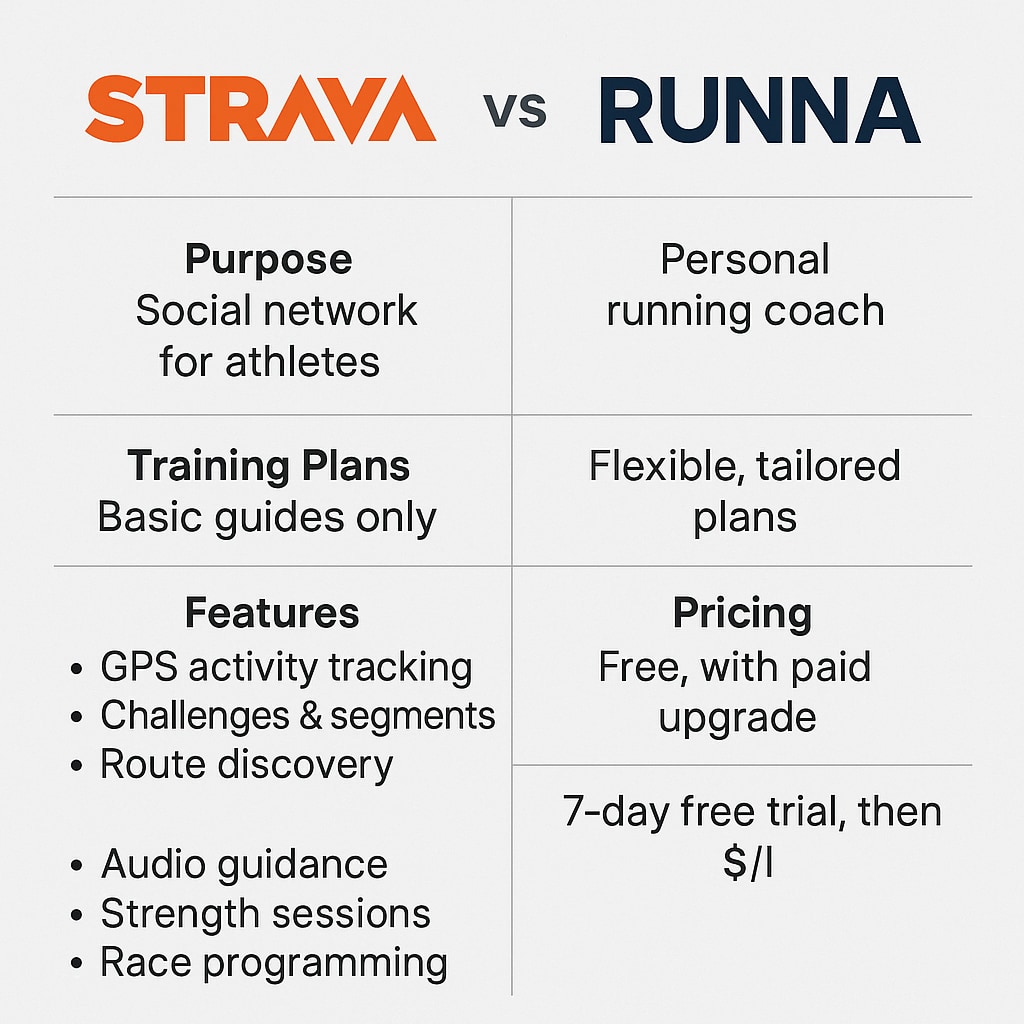
Strava vs Runna: Which App Actually Fits HYROX® & Hybrid Athletes?
Compare Strava vs Runna through a hybrid lens and see how HYROX® and hybrid athletes can use both apps alongside strength work and station‑specific training.
HYROX® Race Shoe Matrix: How to Choose the Perfect Shoe for Your Strength–Speed Profile
This guide breaks down HYROX® race shoe selection from a performance and equipment perspective, with a focus on the Puma HYROX® lineup and how it compares to other top hybrid shoes.
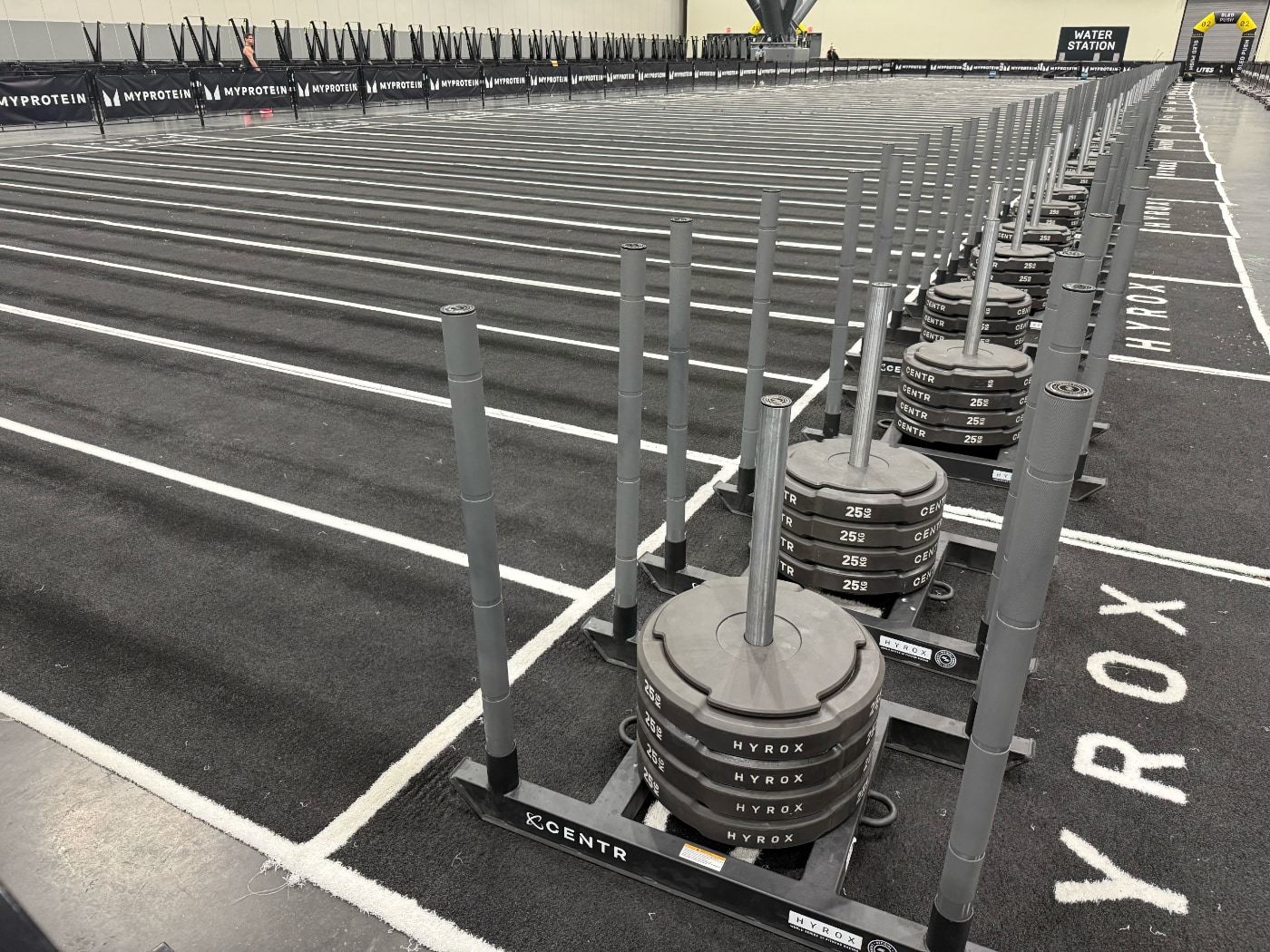
How to Improve Your HYROX Sled Pull (Even If You Don't Have a Sled)
In HYROX®, the sled pull is a perfect storm of physics, unfamiliar mechanics and brutal local fatigue. It's also one of the easiest stations to fix with the right training, even if your gym doesn't own a sled.
The Secret Weapon for Faster HYROX: Build the Aerobic Engine That Holds Pace
Zone 2 training helps HYROX athletes build aerobic durability, recover faster between stations and hold pace under fatigue. Learn how to program it.
HYROX® Stations: Anatomy, Neuromuscular Demands, and Coaching Applications
This article translates the anatomy and exercise physiology of each HYROX® station—running, SkiErg, sled push, sled pull, burpee broad jump, rowing, farmer's carry, sandbag lunges, and wall balls—into practical, coach-friendly insights.
Training Variables in HYROX® and DEKA
Before we design training, we need a clear picture of what the races actually demand from the body. Hybrid racing blends continuous cardiovascular stress with intermittent high-force muscular work. HYROX® and DEKA share this hybrid profile, but differ in duration and structure.
How to Train for DEKA vs HYROX®
DEKA vs HYROX® Part 2: how to train for each event, key variables like volume, intensity, pacing, and recovery, plus coach-built ideas for hybrid workouts and programming.
DEKA vs HYROX®: Two Popular Hybrid Fitness Racing
Compare DEKA and HYROX® side by side—race format, stations, time domains, and training demands—so hybrid athletes can choose the event that fits their goals.
HYROX® 8 Stations – Walkthrough Guide
Master all 8 HYROX® stations with race-pace form cues, clean transitions, and Roxzone strategy. Get quick setup checks, common faults to avoid, and a sample training session for every station.
LT Games: The New Hybrid Fitness Challenge
Life Time's LT Games explained: 17-station hybrid workout, how scoring works, key differences vs HYROX®, and how recreational athletes can prep in 6–12 weeks.
{{ websiteLeadCaptureSuccessState.message }}